filters:

select projects

select blog posts

select news

  • about me

    about me & contact info
    I work hands-on with technology to understand how it may better be used in society. My scope looks at intimate details as well as how products and services are connected as part of a larger system.

    Jeffrey Easter
    3340 18th Street
    San Francisco, CA 94110
    415-203-7596
    feesta@gmail.com
    CV (pdf)

  • project

    twitWheel

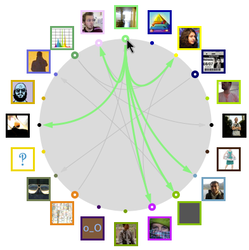
    TwitWheel is a Twitter visualization and browser I developed for TalkWheel. We believe actions are stronger than ‘friends’ on the social internet. The TwitWheel shows tweets made to and from a person and shows other connections within that subset of people.

    twitWheel diagram

    (Google Appengine, RaphaelJS to draw the diagram, and jQuery for other javascript)

  • news

    working for talkWheel May, 2009

    I’m working at a web startup, TalkWheel, whom we did work for when I was at the bitFarm in London. I’ll be building the twitWheel project and guiding the continuing development of TalkWheel with an expected release late in the Summer.

    The talkWheel is a diagram tool for mapping relationships in online communication.

  • news

    move to San Francisco May, 2009

    As fate may be, I’m saying bye, bye Blighty and heading back to America. I’ll be landing in San Francisco to greet a new design culture and see what I can offer from my London perspective on interaction design.

    sanfrancisco1

  • news

    bitFarm January, 2009

    bitFarm1

    In the midst of London’s snowiest Winter in decades, I started a design studio with fellow RCA alums, Joe Malia and Jon Ardern. We shared an interest in bridging the digital experience and the physical world through thoughtful and experimental projects.

    While I am now single-handedly manning the bitFarm America office, our paths will cross again allowing more collaborations.

  • blog

    Re: Lack of exciting design in America January, 2009

    [This a response to Kochiro Nakatsu's commentary that the only prolific American designers died more than 20 years ago.]

    I agree a bit but I believe the American relationship with products is more complex than that. I think America has more focus on the family unit and less on your part in society. The family tries to fill the need for love in our lives so why do we need products to do that? Efficiency is good enough and leaves us more time to spend with those we care about. As family structures change into uncharted territory of fewer marriages, fewer children, and more support from non-traditional communities, the products in the US need to adapt. [disclaimer: not that I like the changing social structures, we aren't likely to go back.]

    Reasons for this:
    (1) although the US tries to maintain a separation of church and state (compared to the UK or Germany who have state religions), the society in the US is more affected by religion. I believe the values of religion are helpful for maintaining strong family relationships but religion doesn’t seem to be sustainable. it has mostly become obsolete for much of the Western world and nothing yet has come along effectively to replace it.

    (2) The US has been engaged in war for the last 7 years. Passions are tied up in it on either side of the issue. Activists are protesting the war rather than addressing domestic issues. Also, financial expenses of the war haven’t allowed the US economy to be as productive as Europe/Japan. Poetic products are culture and I think the US has been starved for sweet, rich culture that makes us cry and dream and fuels more creations.

    (3) [I'm not sure if this is a reason but I will ramble anyway...] Americans are good at marketing… selling things… economics. Post-WW2 we made the move on the global stage partially by exporting culture. Making movies that people wanted to watch and making them think they wanted to watch. I hear people in London refer to the American-entrepreneurialism and how that is lacking in Europe. The American dream is to start something new and get rich or die trying. This is where our economic theory is so strong… the efficiency or utility of a product is important. What features will sell the product? An American asks, ‘What’s the best bargain for my money?’. This approach of efficiency means if you can offer a product that seems to have the same features but is cheaper because it has less unmeasurable loveliness, you will probably sell more. It’s more of an engineering/economic approach that considers users as predictable objects rather than thinking and feeling beings.

    I think the recession is an exciting time to be a designer. I am spending most of my time tinkering and trying to figure out ‘new’ types of products. I have the hope that by the time I’ve finished them, the world will be ready to consume them. I’m spending lots of time thinking of the future and trying to create a vision for myself of what our future will look like.
    2009 will be a gem and 2010 a gold-mine.

  • blog

    Wifi bridge problem January, 2009

    I have been using a wifi-router with DD-WRT installed to connect to our house wifi-router so I don’t have to run a cable to my Viglen MPC-L. Soon I will get a USB wifi stick for it but in the meantime my router does the job.

    Bridging was easy:
    Under Wireless>>Basic Settings, set Wireless Mode to Client Bridge.
    Set the SSID to the same as your host wifi router.
    Set the WEP or WPA (under Wireless Security) to be the same as the host router.
    ‘Save’. ‘Apply Settings’. This is pretty straight forward but it didn’t go smoothly the first time but I found I was getting access through the router so I stopped futzing with it.

    This week I removed the WEP passcode on the house wifi so some visiting friends could easily connect their laptops. To maintain the bridge, I also had to remove the WEP key on my DD-WRT router. This worked fun, but today when I put the WEP key back on the host, the DD-WRT router wouldn’t accept the WEP key. The web interface form had inputs for Passphrase, Key 1, Key 2, etc. I just needed the 64bit WEP key (10 digits) to be saved into one of the ‘key’ slots. DD-WRT would have none of it. It wanted me to enter a password into the Passphrase then press the Generate to create the hex-code for the keys. As I wanted to maintain the same WEP key my flatmates already have stored, I didn’t want to generate a new one.

    My chosen angle of attack was to SSH (ssh root@192.168.1.1) into the router while plugged directly to the DD-WRT router (and wifi on my laptop turned off). I had used the nvram command on OpenWRT so I gave that a try. nvram show spit out tons of settings. nvram show|grep wep spit out the settings with wep in them. nvram set wl0_wep_gen=”1122334455″ followed by nvram commit to save. I didn’t have much confidence in this attempt, but when I typed reboot, my laptops networked apps, like skype, sprung back to life.

  • news

    Design Week profile September, 2008

    designweek1

    I was profiled in Design Week magazine along some fellow recent graduates.

  • project

    Mobile Devices

    (RCA Thesis Project: page 1 of 5)

    Background: I make accessories for mobile phones that bridge the gap between physical and virtual identities and communities. With the social internet, people can share parts of their physical life with a virtual community, but there is little reciprocation. External, mobile devices can be a platform for sharing information between the two worlds.

    Levels of Interaction: Although the mobile devices I have made are physical, they can relate to three distinct levels of community the user is apart of: global, local, and public. The global are the virtual community associated with the device. These people may be anywhere on the planet but access the device over the Internet. The local are other users of the device in physical proximity to each other. They may or may not know each other but have a commonality which is that they are using the device near each other at the same time. The public are the bystanders in physical proximity to the device user. They are involved because they can see the device and therefore can be affected by it. Unlike social networking software for mobile phones, the public are brought into the equation because my devices are worn externally. Instead of a person using a mobile phone to access a mobile community, the person using these devices can start to display part of that community in the physical space.

    module3

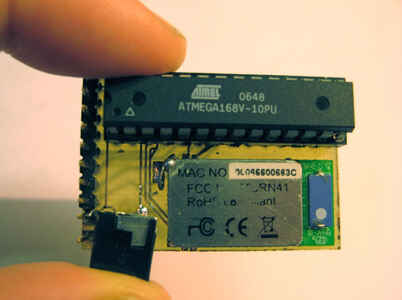
    Base Module: The devices are based on an electronic module I developed that provides the battery, processor, and Bluetooth connection to the user’s mobile phone. This module could be cheap, £5 or less. Each device is a ’skin’ for the module which, like online widgets/apps, perform a straightforward function and can be quickly developed. Depending on the components, the skins can be cheap enough they could be distributed as freebies in the London Lite or given away as part of a promotional service.

    module2

    (Arduino, EagleCAD for PCB design, CuCl for PCB etching)

  • project

    tinyDancer

    (RCA Thesis Project: page 2 of 5)

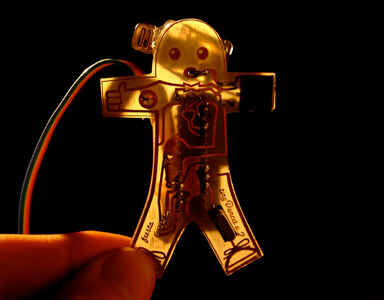
    The tinyDancer device measures how much the user is moving and displays this movement on the user’s online profile through a widget/app on Facebook, MySpace, or a blog. It is a realtime log of the person’s activity level and is viewed with avatars of the user’s friends.

    tinydancer1

    (Arduino, PCB etching)

  • project

    flickrNow

    (RCA Thesis Project: page 3 of 5)

    flickrnow1

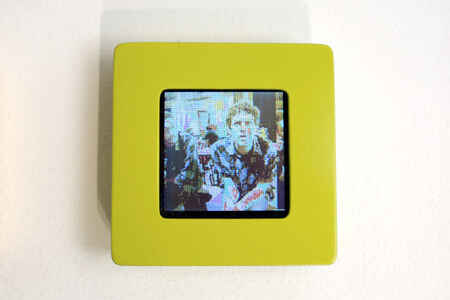
    The flickrNow badge displays a user’s photo from Flickr which has been most recently viewed by others. This image is not only representing photos the user takes but also the content others in the Flickr community find valuable enough to view.

    flickrnow2

    (Arduino, EagleCAD for PCB design, CuCl for PCB etching)

  • project

    mobileProtest

    (RCA Thesis Project: page 4 of 5)

    mobileprotest1

    The mobileProtest device allows people to spread information about a cause they support without the commitment of a direct action protest. Organizations register their cause with locations on a map which individuals can signup to support. As the individual wearing the device goes about their day, messages for nearby causes are broadcast on the device to the public. If enough supporters for a cause are near a location, the devices shift from broadcasting a message to rallying others by alerting nearby supporters of an impromptu protest or flash mob. It involves the global, local, and public communities.

    mobileprotest2

    mobileprotest3

  • project

    dataMob

    (RCA Thesis Project: page 5 of 5)

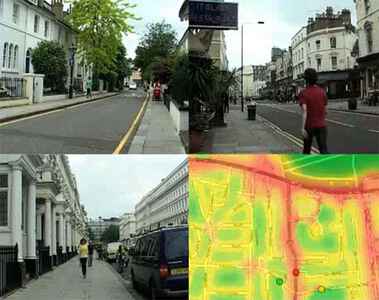
    The dataMob movie illustrates a location-based device that displays one point of data from a statistical map. When lots of people wear the device, each person becomes a physical pixel of a statistical map (ie. air pollution levels in London).

  • blog

    Mobile device (GPS) worries May, 2008

    Worries of losing more life skills…

    Most people have already lost the knowledge of phone numbers of those close to them through the use of a mobile phone’s address book. Our industrialized food production has allowed me to never learn how to kill an animal, but I still know how to cook a ‘processed’ one. How much knowledge of the world is needed to survive daily? How much knowledge is needed for the occasional loss of technology (power outage)?

  • blog

    hand-held intuition tuner April, 2008

    Chris Hand’s social sensors relate to some of my concept. Mobile devices communicating a layer of hidden information to the physical environment.
    social sensors by Chris Hand

  • blog

    Nabaztag April, 2008

    Emotional, consumer robot. Older project but still a consumer product displaying ambient information.
    Nabaztag

  • blog

    Happiness Blog April, 2008

    I’ve been following Will Wilkinson’s blog, The Fly Bottle. He is an Iowan working at the Cato Institute (libertarian thinktank) in DC. Being a combination of a socialist and libertarian, I like some of his arguments relating to ethics, economics, emotions, etc. And he reminds me of my brother.

  • blog

    Bowling Alone April, 2008

    I read bits of Bowling Alone for my dissertation. Critics argue that although we may have lost some social capital, life is not going to go back to the jolly 1950s. Also, many new activities have replaced some of the nearly extinct traditional ones. I believe the problems Robert Putnam says exist are real but need to be modernized (even the book isn’t that old). Combined with Generation Me and Rise of the Creative Class, this book adds to the complexity of those stories.

    Bowling Alone by Robert Putnam

  • blog

    Cyberpunk March, 2008

    We are going into our third week of Easter break. I’ve been doing a lot of programming, thinking, and some relaxing. Before break, I picked up a William Gibson book at the library, Count Zero. In our studies, I define Design Interactions as trying to figure out how technology will fit into society. I’m enjoying reading some cyberpunk and relating the mid-80s visions of the future with where we currently are. Virtual reality was a fantasy for the future. A dream of a what our world could become. Those dreams have been lost in recent years. Maybe with the dot com burst of the late-90s we had a loss of innocence. Maybe it was 9/11 and the ridiculousness of US imperialism that are more cause for worry than foolish, future fantasies. It is somewhat cliche but I am intrigued by dreams. Dreams fuel passion and passion is a reason to live. Before cyberpunk, there was the space-race. I remember waiting in line and getting to shake hands with an astronaut at the Invention Convention which I participated in when I was about 10. I had developed an automatic bed-maker. I wanted to be a scientist! an engineer! I was young and these dreams passed, but the need for heroes has not. I discussed last night with my brother about hope Barrack Obama brings me. For the first time in my independent life have I seen the possibility of being proud of America. His hope is to solve the problems that any innocent child already knows, so his hope feels too near to me and too mundane to keep my interest. We need some new dreams for our society. Nanotech? too small for people to grasp.Biotech/genetics? it’s been talked about for ages.Space? as much of a socialist as I’ve been, privatization of space flight gets my juices flowing. I want to float sans gravity and to feel infinitely isolated. Weird fetish maybe?Robots? maybe as they become consumerized, there will be a similar adoption to the advent of personal computers. The Wild West of robot outlaws will give little Danny something to aspire to. 

  • blog

    Bad Facebook! March, 2008

    I just had the largest emotional reaction I’ve ever had from a web page (not including receiving emails). I tried to find my brother on Facebook. Against my better judgement, I input my password to my gmail account. Facebook returned a list of 120 people of my email contacts who have Facebook accounts. I hit ‘unselect all’ then found my brother’s listing near the bottom and hit ’send’. Immediately, it shows me a list of email addresses with checks. Oh no! My stomach dropped. The gut reaction was that I just invited all these people. Luckily it instead was showing me a list of 590 more people I could invite to Facebook. No thank you and PLEASE for such a potentially embarrassing actioin, please allow me to confirm or give me feedback of what I just did.

  • blog

    Midlife Suicide Rises February, 2008

    The New York Times had an article, Midlife Suicide Rises, Puzzles Researchers [pdf], that may relate to some topics in the book, Generation Me by Jean Twenge. The article is addressing baby-boomers but Twenge points out developments in social and existential patterns between the generations that could lead to large-scale problems. Increased suicide is an unfortunate one. With rapid cultural changes happening from the ground up, no one is looking at the long-term effects. Can designers effectively do this? Designers work as artists, engineers, sociologists, psychologists, scientists, critics, etc. doing none at an expert level. But since none of the experts in those fields consider the other fields, designers span the stage and hopefully make the right connections.

  • blog

    Vibrating motors February, 2008

    PagerMotors.com sells ‘pager motors’ and ships worldwide for $3.00. Many of us have had trouble sourcing them in the UK. I haven’t ordered yet but will soon. Usually people cannibalize a cell phone which seems silly for an inexpensive part.

  • blog

    Virtual environments and social justice February, 2008

    [Jonathan Cabiria talk at Lift08] I just stumbled across this as I was needing a break from work on a Sunday afternoon and I think it is quite relevant to my dissertation topic. I am not much interested in Second Life but I am interested in how people fulfill their identity problems through virtual communities. He points out that marginalized folks end up having problems that our society has trouble dealing with, and virtual communities are provided the space and support those people need. I’ve heard but haven’t yet found that a study of hyves.nl found that people with many friends connected to their online profile also tend to have lots of friends in the physical world. One misconception I’ve been hearing from people when discussing my work in the interim show is that online friends are not ‘real’ friends and those people are actually lonely. Not necessarily true!

  • blog

    R.I.P. old feesta site February, 2008

    I’ve remade my website. I liked my old one. It was cute. For each user, it generated a new color palette. It showed my ‘friends’ or visitors with a visualization of how recently someone else went to the site. However, it lacked a content management system and therefore was hard to update with new projects.

    feesta_old

    Now I’ve stripped down Wordpress to be decently suited for displaying projects. I also can have frequent updates on my current/thesis project (a blog?).

  • blog

    Happiness in the Mobile Era January, 2008

    Statement of Intent for January Crit…. This keeps changing so I’ll post to have it documented.
    Happiness in the Mobile Era
    Over the last 50 years society has changed how people get support in their lives. A higher percentage of people are far from home and fewer people are involved with religious communities or social organizations. These were the traditional sources for support. This, and other causes, has led to an increase in the rate of depression. The World Health Organization believes depression will be the second leading cause of death worldwide by 2020. People’s emotional well-being is becoming a major issue.
    Identity
    I am looking at new and recent systems/services that help people fill and assess their emotional needs. Social networking services, like Facebook and MySpace, give access to new support structures and the rise of the virtual-self. How might someone bridge their physical and virtual identities?
    Mythology
    Mythology is said to be about seeking the experience of being alive. Religions use mythology to help people understand their existence (Joseph Campbell, The Power of Myth). In our modern, secular society we have a shortage of mythology. In what ways can technology bring myths (new or old) into people’s lives to fill the vacancy of past religions?

  • project

    Happiness and the Internet

    This is post-posted in February after I passed (and setup the new website). Here is my dissertation as PDF. I had a tutorial with one of the readers from the Critical Historic Studies department at the RCA last week. She enjoyed reading it and was supportive of my argument that traditional communities have in our society are almost non-existent and virtual ones may be be filling the gaps of support in people’s lives. This was always a point I though could easily be argued the other way. Although the rate of depression has increased in recent decades, some psychologists argue this is because it is a fad and the rate of diagnosis has increased rather than the suffering. I haven’t found any evidence of depression, but there is evidence of increased suicide rates. The clinical depression isn’t interesting to me anyways, it is the almost depressed where I think the major problem lies.Note: There is a major error in the first sentence. The WHO believed depression would be the second leading cause of death by 2020, not the leading cause of death. 

  • project

    Olinda Radio

    olinda1

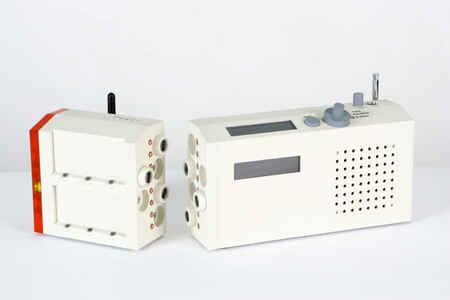
    Experiments in the future of digital radio for the BBC including a social component and a hardware API.

    olinda5

    As a summer intern working on this project at Schulze & Webb (now BERG), I was involved with sketching, experimenting, and discussing as the project gradually became more tangible.

    olinda2

    olinda3

    olinda4

    (Solidworks with a Roland CNC mill)

  • blog

    private web service August, 2007

    I am trying out a private web service the past few days. Similar to a bboard I set up for a group of friends a year ago, the users want to be a part of the community of the service. Comparing it to similar public services, the desires of the users is much different. With a private service, a quirky style is okay and maybe preferred to a flashy, polished, mainstream one common with web 2.0. There is more freedom for the admins but they also much listen more closely to the users. The users feel a part of the community and are not likely to use other products. I think the users are probably a bit more sophisticated and like the exclusivity of the group. This is very different from Flickr which is both public (free) and private (subscription). They have to make it mainstream enough to keep free users coming and they need to listen to their members to keep them paying. This isn’t exactly right but the exclusivity of your service affects your goal as a developer. How Google released Orkut is a good example of planning in exclusivity by making it private….

  • blog

    design empathy August, 2007

    It’s been a while with no entries here….. this summer, thinking about my work and what I want to do, I think it deals with empathy. Design to increase a user’s empathy. That is what I think the world needs. [I'm an idealist.]

    Where does empathy come from and how does someone gain it? It’s a question I should look into but I think having some understanding of yourself helps you understand others. This is where the Guilt Phone project is based. Also, the fantasy world project and RFID watering-can I did at the end of the year.

    Right now, impulsively I’m interested in two directions: a direct product/service that is addictive and easily spreads, and an indirect feature to a grander product to affect people with empathy while at work or having fun.

  • blog

    y = 2x^3 + 7; dy/dx = 6x^2 July, 2007

    I bought a calculus book (circa 1980 for only 4 pounds!) and started working through it this morning! No one’s probably ever been so excited. I just finished chapter 1 and learned some basic differentiation. I did a lot of math in high school and was one of the top students in the district. My classmates would probably be surprised that I’m now studying at an art school. In college, I took some engineering classes but my brain quickly atrophied to not handle complex problems. My goal is to learn the math and use it as an exercise to help me think.

    After learning about subjects purely online for several years, I decided that wikipedia and open course ware, and online tutorials are not substitutes for standard textbooks. Especially with tutorials (online and in books), you don’t learn a skill because you are not doing, you only copy their instructions. Textbooks take more time but also are written to challenge someone. For years, I’ve tried to learn how to program but I have yet to find an online resource that is useful. There are 1 billion google results for how to program (I know, not a smart search) but they are instructions or lists of examples for quick learning rather than discussing the concepts and methods needed to understand how to do something.

  • blog

    Early thoughts July, 2007

    A thought for tying my ideas together for next year…. maybe I would design toys to encourage happy/healthy living. Toys would teach creativity and social behavior at an impressionable age. Legos encourage building. Playing with neighborhood kids in a vacant lot teaches self-regulating of the group and tact. I’m sure there is a gob of research in this area. Even the Lifelong Kindergarten group (worked there for a summer) probably has lots of papers on the subject. I would need to dive into it to find what has been done but then I could go my merry way to see what I come up with.

  • blog

    thoughts on design studios June, 2007

    I’ve been involved with a lot of discussions with folks from my course about our future, the interaction design industry, what is good about design. It is somewhat depressing. We have trouble finding major companies doing interesting work. We have the impression that most major companies are too conservative to take risks and allow innovative ideas to be developed. This might be so obvious for people working in the design world and we have been/are too naive to be aware of it.

    So few companies actually do in-house research without strings attached. It’s expensive and doesn’t really make sense. Startups/small studios seem to be the way to go.

    I remember hearing Tim Cunningham give a lecture when I was in college about working at Westinghouse in the good old days before they collapsed. It was just industrial designers figuring out what to do with all the engineered technologies. I think it was the ’70’s. They were developing on-demand video systems but they didn’t know what to do with it.

    I think a lot about what I want to do and what I’m good at. What direction should I lean? If I keep stumbling along, I’ll reach the crest of the hill and eventually will see what lies beyond.

  • blog

    BT Kiosk June, 2007

    Hmmm, a bodiless kiosk. You use the bluetooth on your phone to activate the head and then you use it for your purpose. Maybe it is just internet access. Maybe it is a ticket machine. I don’t know. Just a thought.

  • blog

    web projects June, 2007

    For a while I’ve been wanting to make a firefox extension that basically allows GreaseMonkey scripts to be run but they don’t have to be installed because they would be called remotely from my server. Maybe it would be a script-of-the-day or maybe just a surprise. It is part of my plan to allow a variety of modifications to other sites that you browse. What if these browser scripts were hooked up to a physical device or some other feedback. Is it just bad physical computing or might it be interesting?

    Another thought was to join two places (maybe two galleries across the world) by a digital worm hole. A flickr maps mashup would be so the point of the gallery in London would be the same as the point of the gallery in Beijing causing pictures to trickle out of the worm hole into the other location. I don’t think this example is very good, but maybe there is something about the virtual/physical space relationship that could be good. Maybe it isn’t physically locative but is a worm hole on the internet. I could see putting a worm hole between two forums where information starts getting spewed out into a foreign space. People would probably be pissed of and my service would get banned but maybe there is something more there. Maybe you drag information stuck to your shoes as you browse. Bits are left on each new website you view. The non-information side (just the path you follow when you browse) is probably recorded by Alexa and Google Toolbar if people use those. Which websites would be messy and would there be a pattern?

    This summer will be fun!

  • blog

    Safe space June, 2007

    One bad experience in a previously safe space can take a long time to be reversed. Trust is so easily tainted and takes so long to grow.

  • blog

    shocking June, 2007

    I have my ipod plugged in to the electric mains through an auxiliary battery pack. My computer is missing paint a few places. If I hold the ipod and let my soft, forearm touch the laptop case, I get a shock. That does not sound good for business. This computer is on its way out and I really hope I can replace it this summer.

  • blog

    Hood.fm June, 2007

    At Hackday last weekend, Chris and I worked on Hood.fm. It is a service for geo-tracking your Last.fm listening habits. I finished the tracking bit, albeit somewhat messy. I need people to test it besides Chris. I haven’t gotten last.fm to work with linux on my computer yet so I’m using someone else’s habits but my location. Actually, I’m faking that somewhat too because I’m mostly at home right now.
    There are many hurdles left to jump but it is stable and not too ugly right now.

    It is my first real product of my own to try and develop and after 5 days, it’s been fun.

    About the project: We are interested in the musical vibes of different neighborhoods. How does musical culture change over time? What are people listening to halfway around the world? What are your neighbors listening to?

  • blog

    Flickrvision June, 2007

    I’m fascinated by http://flickrvision.com/. people are sitting in front of a computer as the images pop up. I’d like to see a ZoneTag version so when the image pops up, the person has just taken the photo.

  • blog

    analog vs analogy June, 2007

    analog vs analogy — hmmm, quite similar.

  • blog

    KatamariJS June, 2007

    Maybe instead of a web version of Katamari where you ‘roll’ all the elements of a page together, maybe a tank version where you can only blast away the small ones at first. You grow with each blast. Maybe destruction is not so good for me. The Katamari version seems too browser intensive. I’ll give it a go in a few days.

    I’m now out the door to Hack Day!

  • blog

    'psycology of lying' June, 2007

    I get a lot of hits here (6%) for ‘psycology of lying’ which I mentioned from a lecture we had last November. I just googled the phrase and was surprised that I am number 2! but then I notice that I’ve misspelled psychology as well as all the people who find my site. whoops! now it is corrected. How embarrassing.

  • blog

    Wikipedia Firefox Extension June, 2007

    Now that our coursework is through for the year and the degree show is up (and opening tonight!) I’ve been working on somethings I haven’t had time to do for a while. I want to play around with mobile phone programming which was a huge failure when I tried last winter. I worked most of the day yesterday and still did not get my USB bluetooth dongle to work properly in Linux. It has trouble maintaining a connection to the phone. I can copy a file but to install a program on my phone (a Series-40 Nokia), I need a better connection. It was always crummy when using Windows as well. I will get another dongle and give it a go. Grrr….

    Since mobile phone work is postponed for now, I learned about making a Firefox Extension. I often use the “Search Google for ________” in the context menu by selecting text, right clicking, and pressing ’s’. It is very quick. I often search for something like ‘Tibet’ and know I just want the Wikipedia entry from the results. So I wrote a basic extension that gives me the option to ‘Open in Wikipedia’, ‘w’ in the context menu. It will take a few weeks for it to set in like most adoption of shortcuts, but I think it will be good. Other extensions for searching Wikipedia offered more features than I wanted. The extension is packaged and available at:

    [http://feesta.com/gadgets/wikipediasearch.xpi]. It should just install, but it may force to you download it and then install. I will get that fixed soon, I hope.

  • blog

    If search is dead…. June, 2007

    If search is dead and people get/find their info through other/trusted pathways, is there or what is the core that will follow.

    portals > search > ( ???? )

    maybe I need to write more about why I think search is dead. That will come later.

  • blog

    Self-indulgence in projects June, 2007

    I’ve been chatting with my flatmate about our dissertations. Very helpful. She feels like she is being too self-indulgent with her topic and won’t push it as far as she could. This triggered a thought as to why I struggled as a furniture designer after I left working for Craig at Marcus Studio. I needed a problem to solve rather than just being an artist and creating something. My projects at the RCA have all had elements relating to people’s fulfilled and unfulfilled existential needs which is an area I find interesting and worthy.

  • blog

    The Widgetized Self June, 2007

    Online Fandom » The Widgetized Self

    www.onlinefandom.com/archives/the-widgetized-self/

    This blog entry is good. I buy the spiel. I have grand plans for some firefox extensions that act as widgets for different sites. That might be one possibility for tying communities together. I’m also interested how this plays out in the mobile world.

  • blog

    Cloud Advantage June, 2007

    Although I now fear Google, I still use many of their products. Comparing the google office offerings compared to Microsoft Office, I think a major benefit to google’s is that they host it so you never have to upgrade. This may be the kicker that pushes Office out. New features are rolled out more often. The evolution of the product becomes less important. People stop worrying about the tools and focus on the work (or more important things like life).

    The traditional software model is based on, sometimes purchased, downloaded/installed packages. Hype was built-up about new features, speed, and functionality which grew interest and drove sales at the release date. There was a culture around this. Now the IT and techno-elite will find something new to talk about.

  • blog

    bed sheets June, 2007

    Crisp, starched bed sheets are considered desirable, but freshly wind-dried sheets are nice, too.

  • blog

    Interaction Design Symposium June, 2007

    I went to a symposium the other day for interaction design students organized by Central Saint Martins Digital Media department. I snuck away from the RCA but was needing a break. It was good to meet other students and see their work. We each gave a brief presentation and had several talks by designers working in Bethnal Green. I left feeling like our course is quite different from other programs…. the way it is organized, feedback, expectations. I don’t think ours is necessarily better even though it is the ‘RCA’, courses push students differently. Being quite lost and unsure about my path, it was good to meet new people on similar paths. They were friendly and gave me some confidence, and I think things are still good…….(rambling)… at the RCA, we might have more emphasis on the existential-crisis than the other programs. :)

  • blog

    When watching a movie…. June, 2007

    When watching a movie, can your eyes tell that they don’t have to refocus from viewing a closeup to seeing a tree a mile off? Although extremely complicated to produce, it could make the experience much more real/vivid and might be better on your eyes so they are not in the same state for so long.

  • blog

    harnessing the Googlebot June, 2007

    A year ago, I made a prototype web app as a proof-of-concept for the Dollhouse physical-virtual communication. This module handled the queue of people wanting to have control of the virtual dollhouse. The page would reload itself every second. I could open several tabs, each reloading frequently. They would fight over control. I set it up so only one could have control at a time. The others waited. They felt like dumb little robots like the ones shown by Rodney Brooks in Fast, Cheap, and Out of Control: a simple instruction set, and wait to see how many of them react. It was a way to study swarm behavior and relates to insects. I wondered about using these PHP/MySQL-based bots do do the same thing. My thought was to make a web-based first person shooter where the opponents are just browser tabs. This isn’t that exciting and I didn’t give it much more thought.

    Lately, I’ve wondered if I could do the same thing but use a web search spider like Googlebot or Slurp to get stuck in a maze and the user has to hunt them down. I want to build it but I need to be working on my dissertation rather than playing with my toys.

    I’m wondering if you can use the behemoth to do your bidding.

  • blog

    RCA Fashion Show June, 2007

    I got to see the RCA Fashion Show today. As a designer, it is always fun to see what other disciplines are creating as cutting edge… vehicle design, product design, etc. I usually try to imagine people using it, even if just in a chi-chi way. Some of the outfits felt indulgent by the designer but other ones I felt fit with a progression of current trends. I particularly liked some knitwear of a dress or ‘jumper’ showing all the layers a person might be wearing, referencing current trends. It had a tank top, maybe a scarf, a sun dress found at a charity shop, but it was all one knitted piece. Other pieces that felt like a possible near-future trend were similar using a mash-up of found clothes which on their own would have been trendy, but now they are one article.

  • project

    Mobile Penance

    A mobile phone software to confess your guilt. In our secular society, how do people deal with their guilt? Is there hope? Must we revert to a religious society?People nearby receive the confession via Bluetooth and have the option to send you forgiveness.

  • blog

    London Hackday May, 2007

    Yay! I will be going to HackDay right after the Degree show opens. I’ll probably be a bit knackered from prepping the show and may miss out of some of the RCA festivities, but this will have festivity-fun as well.

  • blog

    quantitative vs. qualitative research May, 2007

    When working with Said Business School at Oxford University a few weeks ago, I think confusion comes from different approaches to finding problems. We tend to focus on a large exploratory phase. They take a early on and flush it out making it efficient and productive. maybe these are similar to qualitative and quantitative research methods.

  • blog

    China and US trade May, 2007

    China and US trade | Lost in translation | Economist.com

    America is right that China needs to revalue, but for the wrong reasons. And arguing that a revaluation helps America’s economy makes it less likely that Beijing will act. Moreover, if George Bush foolishly slapped harsh trade sanctions on China, America’s economy would be the biggest loser. Likewise, China is foolish to resist a more flexible exchange rate partly because it does not want to be seen as caving in to America’s demands, when it is in its own interest. If the world’s two leading engines of growth remain at loggerheads, everyone will pay the price.

    ————–

    I am wondering about the economics discussed here. I don’t think the article addresses the longterm interests of the US. FTA:
    The biggest myth of all is that a revaluation of the yuan would greatly reduce America’s trade deficit. The real cause of the deficit is that Americans spend too much and save too little.

    I think the yuan being undervalued compared to the US is actually artificially pegging the dollar up. Maybe the US needs huge inflation to cause Chinese products to be more expensive so people don’t buy as much crap from Walmart. The sooner the US can break its addiction with buying, the sooner it will figure out a sustainable economic model. Living in London and having many goods cost 60% or so more than the US (17% VAT – 8% US sales tax = 9% included), as an observation, it seems to me the US is just getting its good cheaper and may pay the price later.

    I believe the US has mostly had ‘closed doors’ meetings with China to pressure currency changes. Over Bush’s two terms, I have followed the news fairly closely, mostly listening to All things considered. I don’t know what Bush has done policy-wise to affect the US economy. Is it just lack of growth? Did the infamous tax-rebates not have any real effect? Might his tenure go down in history as not just having a failure with the Iraq War but also for slaughtering the US economy. I would guess the slaughtering could be traced back to the Clinton-era. I’m not into economics enough to dig deeper or to know where to dig, but I do enjoy thinking about it some.

  • blog

    futurologist May, 2007

    After a talk last night by a futurologist (mostly private sector and slightly techno), I’m quite curious about the field. I have a sensitivity to why people do what they do.

    Some of the areas I’m initially interested in are:

    O2 (mobile phones)
    search
    cars (maybe not)
    retail
    telecom
    nano
    TED/Pecha Kucha-style conferances
    marketing
    companies.

    The talks we’ve had lately deal with professional development. The speakers discuss how they got started and the ins and outs of their industry. Very relaxed and off-record. They help lower our angst levels with not knowing how the course will be accepted.

  • blog

    Don't answer the question asked of you…. May, 2007

    “Don’t answer the question asked of you, answer the question you wish was asked” -Robert McNamara (from the Fog of War)

  • blog

    Still doing well without…. May, 2007

    Still doing well without using an ALARM (except for mission critical times like airplanes and major appointments, but even those days I usually awake before the alarm. This morning I got home from studio at 12:40am the house was dark, and I read and went right to bed. I didn’t bother digging my phone out of my pannier to at least have a clock in the room. I slept well and was amidst a vivid dream when I rolled over and thought how lucky I am to sleep in. My brain flagged that and remembered I couldn’t sleep in. I woke up immediately and got off to my pancakes and off to school. Woke at 7:25am (found a clock on my new iPod (an unexpected gift!) Arrive at school at 8:15am.

    I’m rambling… but being used to not using an alarm (and getting a reasonable amount of sleep each week), I think my body now knows to wake up early if I know I need to get up. I can sleep till 10 or I can get up at 7.

  • blog

    Firefox Extensions to make May, 2007
    • flowers
    • get definition m-w (right-click context menu)
    • maybe a search wikipedia? I know there are others out there but I often use the right-click, ’s’ to search a select word in google. I’d like to have the same with a ‘w’ for wikipedia.
  • blog

    When stressed…. May, 2007

    When stressed and teetering, the effects of movies/music/stories can be extreme on a person.

  • project

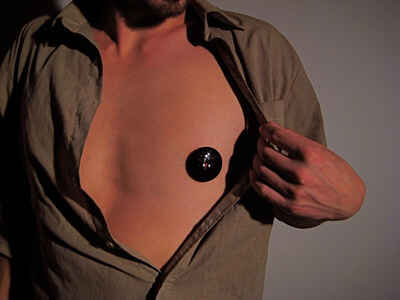
    Bluetooth Nipple Clamp

    nipple1

    This silent ring-tone accessory pinches the nipple when receiving a call or text-message.

    What is emotional design and how does it address our darker, private needs? This emotional interface for a mobile phone explores how a product can alter an activity as common as receiving a call. The banal, often annoying, becomes intimate even when the person is in the public environment of their daily life.

    When a call or SMS is received, the phone sends a signal over Bluetooth to the nipple clamp. The device pinches the nipple and alerts the wearer to answer the phone.

    The collaboration with 2 Industrial Design Engineering students for O2 explored ways people could experience their sexuality and submissiveness during their daily lives.

  • blog

    Design Interactions Process April, 2007

    1.) Find a difficult area to design for.

    2.) Have that area be the main part of your concept.

    “Now focus on the interaction…”

    “What? I haven’t done any physical interaction all year? oh crap.” I guess we handle psychological/emotional interaction?

  • blog

    Double Standard (related to US politics) April, 2007

    With the World Bank and Wolfowitz as well as the Attorney General problems, if the same thing happened with a school principal, they’d be fired. It is ridiculous that if you are at the highest position in your field, you are above ethical standards.

  • project

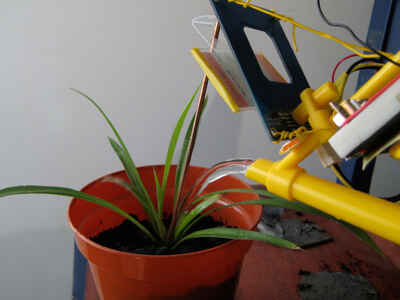
    RFID Watering Can

    Plants are sometimes given as gifts. The giver of a gift is not supposed to doubt that the gift will be cared for. The recipient wants the giver to know the gift is in good hands.

    Working with Susan Ibreck at an RFID workshop, we developed a device which lets the giver know you are taking care of their thoughtful present. Each plant has an RFID tag. When the plant is watered, the tag is read by the watering can. When watering can is later plugged into the USB cable, an email message is sent to the person who gave the gift.

    While a USB watering can that reads RFID tags is ridiculous, we proposed that an object tracking a mundane physical action like watering your plants could communicate an emotionally charged bit of information. Your commitment (or lack of commitment) to your friends generosity becomes explicit.

    rfidwateringcan1

  • blog

    London is…. March, 2007

    London is dense because the streets are so narrow. Ridiculously so in the financial district between Bank and Swiss Re. just look at Google Maps.

  • blog

    U2 of 17 years ago… February, 2007

    Last term, Steve and I stayed up too late watching some of the Zoo tour by U2 in the early 90’s. We found it interesting how extremely religious it was yet still mainstream. As much of the industrialized world is becoming more secular but also more extreme in religious beliefs, I believe there is a need for a similar cultural force to offer people who feel the need to follow a faith a place that is not off the deep end.

    hmmm…. will this go anywhere?

  • blog

    Legend January, 2007

    I’m very interested in legend, myth, folklore and how it fits into the modern era. Moving to London, a city with gobs of history compared with the small, Midwestern city I grew up in, I have enjoyed exploring and finding the remnants of a centuries old wizard’s house. Perhaps a goblin factory off an alley near Brick Lane.

    The validity of a story matters little. Singing along to songs is often hard to get the correct words. Does it matter? I find when I look up the lyrics to a pleasantly catchy tune the magic is gone. I no longer hear the slurred words and the song is changed to me forever. I’d rather have kept my innocence and lived in ignorance. How much ignorance is acceptable? Is it acceptable to rewrite some historic events to add mystery? I am easily frustrated when people are clueless about current events. With Wikipedia, articles tend to have a slight slant one way or another. If the slant is too unbalanced, it gets labeled as having neutrality problems. Maybe as history is rewritten. if the events are too important to be changed, people will flag them and fisticuffs will begin.

  • blog

    Online persona for others January, 2007

    create an avatar for blog authors, etc…. the service adds to your experience by supporting your false ideas about the person as well as censoring contradictions.

  • blog

    Loss of involuntary body control January, 2007

    maybe as we modify ourselves and get control over a higher percentage of our brain (flying, telekinesis, etc) we would lose some brain functionality. our brain would stop involuntarily controlling muscles for swallowing, heart beating, etc.

  • blog

    solitude and the internet… December, 2006

    being a hermit .. not meeting people face-to-face .. but maintaining contact with folks online .. is it the same?

  • blog

    Paranoia December, 2006

    cycling out of a city through countryside… see the system and know it’s too large to be fake. must be real!

  • blog

    Momento (the movie) December, 2006

    …taking your psychi faults and exploiting them for your own extreme experience.

  • blog

    search by word definition… December, 2006

    referencing a dictionary, can I have a program figure out what definition of each word is being used?

  • blog

    liminal December, 2006

    adj. marginally perceptible

  • blog

    5 Rules to be successful November, 2006

    (by/from Danah Boyd)

    1. “Demo or die.” This was the mantra at the Media Lab and i absolutely detested the process of having to demo Lab work to every visitor who entered the building. It was exhausting and repetitive. Looking back, i can’t tell you how much this changed my world. Through the Lab, i learned to be able to present anything on the fly to any audience. I learned how to squeeze a 30 minute talk into 5 minutes and build on a 5 minute talk to fill an hour with useful information. I learned how to read what people knew and adjust what i was showing them to their interests and level of knowledge. Speaking and expressing ideas to a wide variety of audiences is so important. And it takes practice. A lot of practice. You can’t just hide in a library cubicle for years and then expect to give a stellar job talk. The reason that i speak so often is that i think that i need the practice. I want to learn to get my point across. Sometimes, i fail, but i keep trying.

    (This also applies to writing. Be able to write to any audience. Learn to write an op-ed, a persuasive blog post, an academic article, anything and everything! I detest writing; that’s why i started blogging my ideas. Practice practice practice.)

    2. “Learn the rules. And then learn how to break them.” I was a punk kid who refused to follow by anyone’s rules. I got kicked out of everywhere. I thought that this was radical. When i was in high school, my mother explained that one of her best skills was telling people to fuck off and go to hell in a ladylike way so that they didn’t even know how to respond. Over the years, i realized that there is immense power in understanding the rules and norms and tweaking them to meet your goals. Rejecting society is fun as a kid; figuring out how to circumnavigate barriers to entry is more fun as an adult. Do it with grace, kindness, and sincerity. (I fear that explicitly stating examples of this here might get me into trouble.)

    3. “Diversify your life.” The term diversity is so loaded it’s painful, but i can’t think of a better word to explain what i want to explain. Get to know people from every walk of life. Read books from every discipline. Read different blogs. Attend conferences that address the same issue from a ton of different perspectives. And when you attend those conferences, spend 50% of the time with people you know well and 50% of the time with people that you barely know. One of the best decisions i made at SXSW this year was to not flit around but to hang out with one small group per night and really bond. I hate the concept of “social networking” because it seems so skeevy. The idea isn’t to build a big rolodex, but to build meaningful relationships that exist on multiple levels – professional, personal, etc. The more people and ideas you encounter, the more creative you’ll be able to be and the more that you’ll be able to contribute to a conversation on top of the things that you know deeply through your own work.

    4. “Make mistakes. Publicly. With lots of witnesses. Apologize. And learn.” It’s easy to hide from mistakes and it’s natural to try to keep them under wraps. I think that there’s a lot of value to making mistakes publicly. First, that means that you’re willing to try new things out. Second, it means that you’re going to be forced to learn from those mistakes fast. My blog is filled with hypotheses that are wrong, ideas that are half-baked. I say stupid things. People call me on it and i’m learn from that. I get super frustrated when people are not willing to put things out there until they are just perfect. The fact is that once something is in public, it will be critiqued and challenged no matter how fully baked you think it is. This is true for software and it’s true for ideas. The bugs are found through interaction. I understand why academics love to control and perfect things before they go out there, but often, it’s too late. Don’t avoid the press – the stupid questions that they will ask will make you think more than any challenging question your advisor can punt your way. And yes, they will misquote you no matter how much you try. But then you get to read the blogs and see others critique your misquoted half-baked explanation and you can learn from it. It’s better to fumble in public than to stay in your house any day. The trick is to pick yourself up, try to correct any misunderstandings, and use it to learn.

    5. “I’m insane. It’s not all fun and games. Success != happiness.” Folks assume that being successful is all wonderful, just like they imagine that being a celebrity would be ideal. It’s a Friday night. I’m writing this blog entry to take a break from an essay that’s overdue. I don’t take weekends. I barely date. I don’t have children. My business class seats are because i spend more time in airports than sleeping in my own bed. Getting out of bed is as hard as getting my cat into her car carrier. It looks good on Flickr because no matter how crap the day’s been, i know that i’m supposed to put on a smiley face when i write on this blog, send a Twitter, or get on stage. Every day, i wake to emails that are meant to make me feel guilty about not helping this that or the other person. For all that i do, i’m always told that it’s not enough. And the more public i become, the more people tear me to pieces. I become the target of people’s anger, like the poor father whose son committed suicide and blamed me. That shit hurts like hell.

    —————-

    WHY? I think this is quite relevant for me right now in my life. I think especially the first. Not just presenting it but also making lots of stuff to talk about. Lately, I’m enjoying making stuff (mainly web-based right now) outside of the course and that is good.

  • blog

    Psychology of Lying November, 2006

    We had a lecture by a psychologist speak about lying and deceit.

    The part I found most relevant to me dealt with detecting lying. Juries, police, judges all could only detect liars about half the time. A person good with a polygraph was only slightly better at about 60% accuracy. Voice-stress analyzers have better results but not reliable. He said insurance companies have started using the voice-stress analyzers inline with the telephone when receiving calls about claims to know if they should trust you or maybe investigate more.

  • blog

    Cloud Appreciation Society November, 2006

    We had a lecture by a guy from the Cloud Appreciation Society this evening. It was quite entertaining with stories and anecdotes about the clouds.

  • blog

    xeno-anxiety? November, 2006

    For the phobia project, I have been interested in xenophobia as the main direction. It is such an emotionally charged topic that I moved forward very slowly.

    Since moving to London, I have experienced much racism towards immigrants. The instances are shocking but not really surprising. The city has had about 400,000 immigrants from Poland in the last 2 years. My neighborhood has several Lebanese, Arabic, and Turkish grocery stores and I know there is a growing community from Africa as well. The city is struggling with immigration. Financially, it is one of the most influential cities in the world but I’ve heard it is now only 40% ‘English’.

    I’ve found discussions about xenophobia that deal with digital xenophobia, plans by the US military to use it for political reasons in Iraq, how it relates to racism, and how the Minutemen in the US are not anti-immigrant, they are anti-illegal-immigrant. This last one was particularly interesting for me. I am not convinced that there are not xenophobic tendencies there, but I am not them. Some people would label them as xenophobic but they can also be considered nationalistic. This is the space I will work.

  • blog

    Fear of…. November, 2006

    ….being short
    ….utensils
    ….people being friendly
    ….rainbows
    ….clothes
    ….words giving responsibility
    ….catastrophe

  • blog

    Complicated Pleasures Project November, 2006

    We got our new brief yesterday: Complicated Pleasures. Design an electronic placebo for a real or imagined phobia.

    Hmmm… after the last project, I’d like to create something I believe in. something that makes sense in the world rather than just a classroom exercise.

  • project

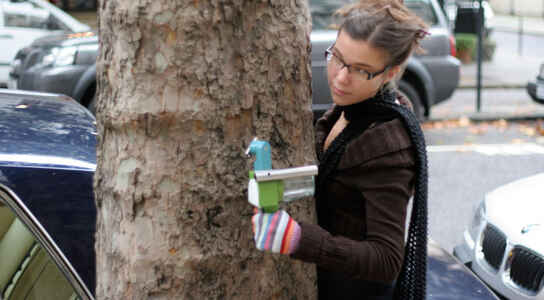
    Mosquito Gun

    mosquitogun1

    How to retrieve DNA in an environment of domestic gene therapy?

    The shift from cosmetic surgery to gene therapy leaves you clueless about your neighbor’s newest mod. This device assists in finding out this juicy bit of gossip.

  • project

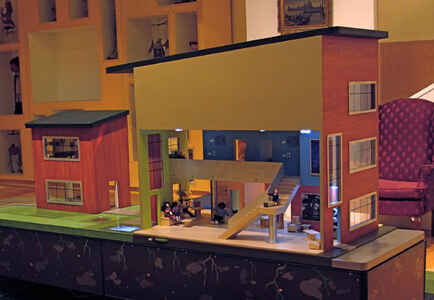
    Dollhouse Exhibit

    dollhouse1

    This dollhouse has a combination of discovery and play for the Pittsburgh Children’s Museum.

    I was tasked to build a large dollhouse with some ‘interactive’ elements like working lights and sounds. I was also involved with developing new activities on the museum’s website so we created a virtual version of the dollhouse with connections to the physical one. Online users can turn lights on and off in the physical space and vice versa.

    I designed the house and oversaw its fabrication. I also developed the electronics and wrote the software to control the effects (Basic Stamps with serial connection to a computer with a dozen USB sound cards).

    dollhouse2

  • project

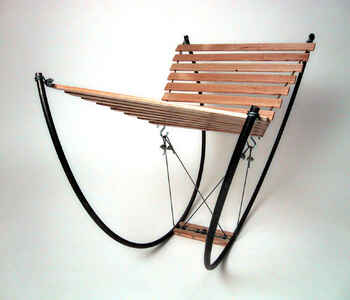
    Rocking Chair

    Goal: A chair using tension as an integral member of the structure.

    rockingchair1

    rockingchair2rockingchair3

    rockingchair4

  • project

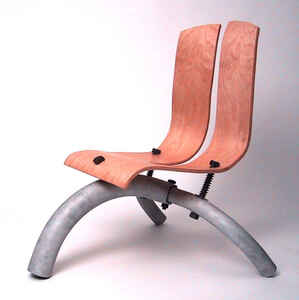
    Spring Chair

    Goal: A chair of salvaged materials with a mechanism.

    spring1

    spring2spring3

  • project

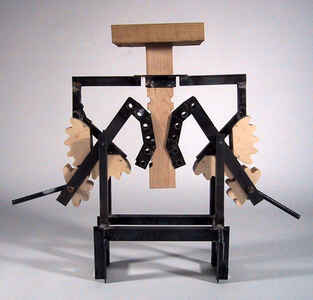
    Mechanical Stool

    Goal: A chair with mechanisms as it’s focal point.

    This chair balances balances when someone sits on it like a scale.

    mech1

    mech2

  • project

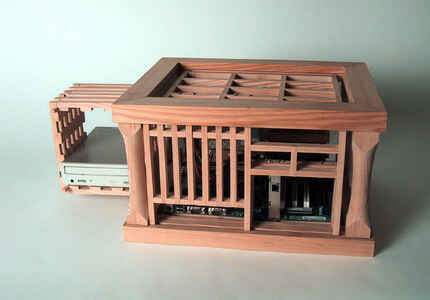
    CPU

    Goal: Make a computer case which uses the warmness of Japanese joinery to make the opaque workings of a computer more approachable.

    cpu1

    cpu2